
Purpose
Propose solutions to safety and wellbeing concerns with an informal settlement
Client
School for International Training, South Africa
Team
Kristen Jussila
Ansleigh Davies
Jacob Pavlik
Danielle Propst
Redesigning the Conditions for Community
Urban Design + Creative Strategy
Kraal is an informal settlement in Cape Town's Bo-Kaap neighborhood that faces challenges ranging from inadequate housing, limited infrastructure, to social isolation. This proposal reimagined the community through participatory design, treating these issues as opportunities to strengthen connections between people, place, and the city.
Working alongside residents, we developed a master plan centered on three goals: strengthening community identity, improving safety and wellbeing, and creating more accessible, resilient housing. Through interventions such as a community center, terraced pathways, re-blocked housing, and expanded infrastructure, the proposal demonstrated how participatory design could foster stronger relationships between people, place, and the broader Bo-Kaap community.

About Kraal
The Kraal was first occupied by squatters in the early 1980s.
Since the 1980’s the Kraal has grown to about 25 shacks accommodating around 150 people.
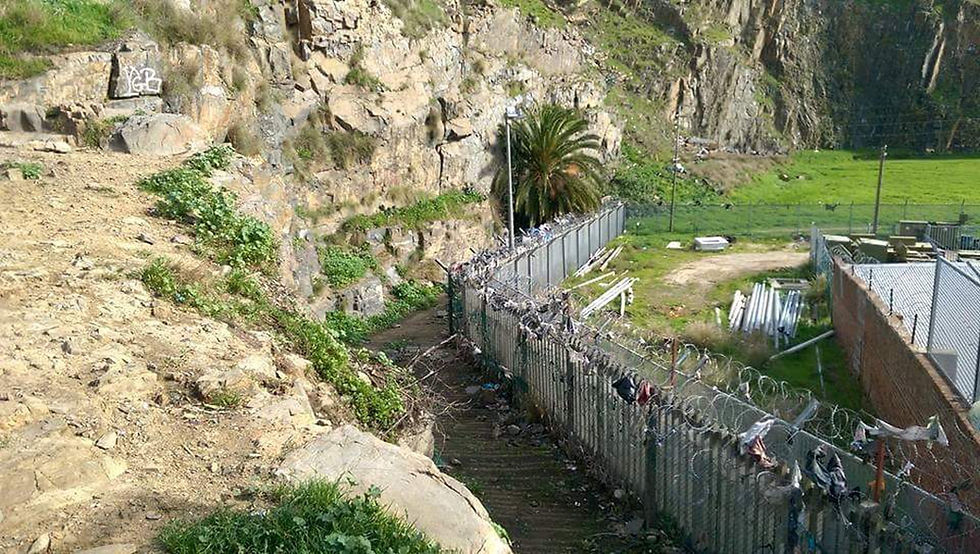
The settlement sits in an abandoned quarry, one of the few vacant urban spaces left on the edge of Cape Town's central business district.
The mosque authorities and other Bo Kaap residents have complained about rising crime in the area.
Plans to upgrade the site into a no-alcohol hotel have been proposed and applied to the city council.
Location:
Cape Town, South Africa

Harassing Tourists
03
Some residents of Kraal will pickpocket tourists, as they are an easy target and often carry valuables with them such as iPhones or cameras.
Criminals from surrounding areas will use Kraal as an escape route since it is such an inconspicuous community and offers easy access to major roads.

Criminal Movement
02
The community is a perfect place for selling and using drugs since it is hidden away and often overlooked, as well as being located close to the city center.

Drugs
01

Influence on Children
04
The criminals in and around Kraal become role models for the children. They begin to develop the same habits as the criminals since they are offered few or no positive role models or constructive after-school activities.

Talking to the Community
Insights drawn from conversations and interviews with local residents
Chair of the Bo Kaap Civic Association:
Osman Shabodien

"It's against the scripture of all religions to evict poor people from their homes, so we need to ensure the residents of the Kraal have access to decent housing before moving them from the site."
Charting a Path Forward


Sustainable Impact
01
02
03
Beautification of the Area
Local Food Production
Child Development
Feelings of ownership and pride will encourage the residents to take better care of the area—from cleaning up trash to expanding or improving their homes.
A community garden will provide food for the community, but could also develop into a possible source of income for the residents.
Having a community center will provide a safe place for children to go after school and a place for more children’s clubs and activities.
04
05
06
Increased Safety
Safety and Wellbeing
Community Involvement
Blocking the easy access to the highway will discourage criminals from running through the community, and improvements such as re-blocking and better lighting will discourage crime within the community.
Improving the houses and infrastructure will help keep the residents warm and dry and will discourage the spread of disease.
The houses will be made in part from local materials, and the community will be involved in the design and construction process.
"Cape Town Squatters Battle Plans for Muslim Hotel - BBC News." BBC News. BBC, 12 Oct. 2010. Web. 15 July 2015.
Lewis, Anel. "We Feel Safe Here, Say Kraal Residents." IOL News. Independent Online, 18 Mar. 2015. Web. 15 July 2015.
Nicholson, Zara. "Muggings ‘the Norm’ in Bo-Kaap." IOL News. Independent Online, 21 Feb. 2014. Web. 15 July 2015.
REFERENCES